

Upcoming Event: 32nd Arnold Sommerfeld Lecture Series Featuring Prof. Mehran Kardar (MIT)
We are delighted to announce that the 32nd Arnold Sommerfeld Lecture Series will be held next week, from January 13 – 15, 2026. This year, we are honored to welcome Professor Mehran Kardar (Massachusetts Institute of Technology) as our distinguished speaker.
About the Speaker
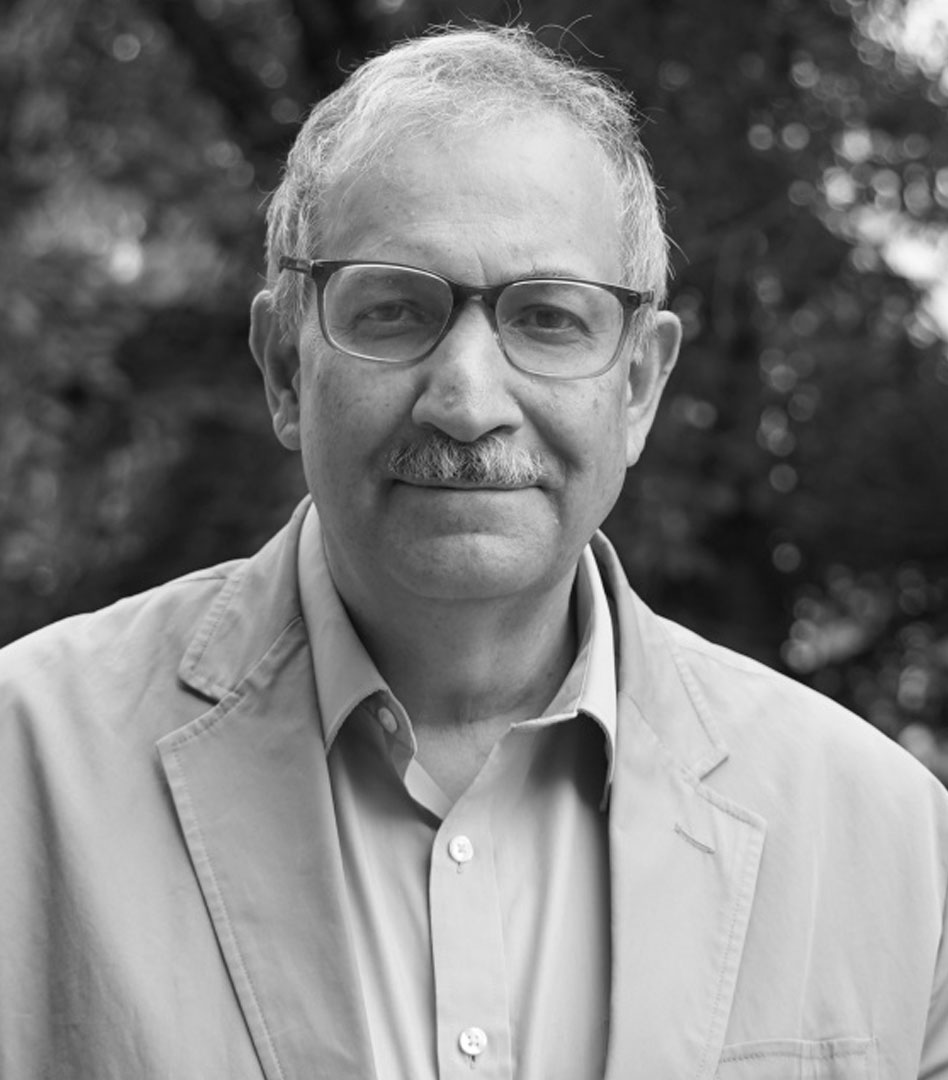 Mehran Kardar is a leading Iranian-American theoretical physicist whose work has profoundly shaped modern statistical physics. He is particularly well known for the Kardar–Parisi–Zhang (KPZ) equation, which captures universal features of interface growth. His research spans a wide range of problems in statistical mechanics, including non-equilibrium collective behavior such as in active matter and deposition processes; disordered systems like spin and flux glasses; and soft-matter physics involving polymers, membranes, and gels. Kardar has also contributed to the understanding of fluctuation-induced phenomena (e.g., Casimir forces) and to biological physics.
Mehran Kardar holds the Francis Friedman Professorship for physics at the Massachusetts Institute of Technology (MIT), and he is also affiliated with the New England Complex Systems Institute. Kardar earned a B.A. and an M.A. in Natural Sciences at Cambridge University, England. He completed his Ph.D. in physics at MIT in 1983 under Professor A.N. Berker. After serving as a Junior Fellow of the Harvard Society of Fellows (1983–1986) he joined the MIT faculty, where he has remained since.
Throughout his distinguished career, Kardar has received numerous honors for both research and teaching. Early recognitions include the IBM Predoctoral Fellowship, Sloan Fellowship, and the Presidential Young Investigator Award. At MIT, he has earned multiple teaching prizes, such as the Edgerton Award and the John David Jackson Excellence in Graduate Physics Education Award. His scientific contributions have been acknowledged through the Guggenheim Fellowship (2001), the Simons Fellowship (2020), the Alexander von Humboldt Foundation Research Award (with which he visited the Max Planck Institute for Dynamics and Self-Organization and the University of Göttingen) and the prestigious 2025 IUPAP Boltzmann Medal. Kardar is a Fellow of the American Physical Society and the American Academy of Arts and Sciences, a member of the National Academy of Sciences, and recipient of the APS 2026 Lars Onsager Prize. He is also the author of two influential textbooks—Statistical Physics of Fields and Statistical Physics of Particles.
Schedule and Abstracts
Public Lecture: The Force of Nothing: Attraction and Repulsion in the Quantum Void
Date: Tuesday, January 13, 2026 at 17:15 h
Location: Lecture Hall B052, Theresienstr. 39
Abstract: Quantum physics teaches us that even the emptiest vacuum is teeming with fluctuations of electromagnetic fields. When these fluctuations are confined between objects, they produce measurable forces: the Casimir effect describes an attraction between uncharged conductors arising solely from the confinement of the quantum void. In this talk, I will explore how this subtle quantum phenomenon connects to ideas of attraction, repulsion, and mechanical work. After introducing the origin and measurement of the Casimir force, I will discuss whether it can be made repulsive, and why true levitation remains elusive in equilibrium. Extending these ideas beyond equilibrium reveals new possibilities: radiation pressure from heat, nonreciprocal materials that generate motion and work without contact, and rotating bodies that spontaneously emit light. Together, these examples show how the restless quantum vacuum continues to surprise us.
Theory Colloquium: Boundaries, Inclusions and Disorder in Active Matter
Date: Wednesday, January 14, 2026 at 16:15 h
Location: A348, Theresienstr. 37
Abstract: Active systems are driven out of equilibrium by exchanging energy and momentum with their environment. This endows them with anomalous mechanical properties which leads to rich phenomena when active fluids are in contact with boundaries, inclusions, or disordered potentials. Indeed, studies of the mechanical pressure of active fluids and of the dynamics of passive tracers have shown that active systems impact their environment in non-trivial ways, for example, by propelling and rotating anisotropic inclusions. Conversely, the long-ranged density and current modulations induced by localized obstacles show how the environment can have a far-reaching impact on active fluids. This is best exemplified by the propensity of bulk and boundary disorder to destroy bulk phase separation in active matter, showing active systems to be much more sensitive to their surroundings than passive ones.
Research Seminar: Life on a Noisy Seascape: Extinction, Growth, and Diversity
Date: Thursday, January 15, 2026 at 16:15 h
Location: N020, Geschwister-Scholl-Pl. 1
Abstract: Populations and communities rarely evolve in static environments; their fitness landscapes fluctuate across space and time, forming what may be called a noisy seascape. This talk examines how such variability modifies classical models of population dynamics and community stability. Beginning from the logistic equation, I will show how spatiotemporal fluctuations in fitness lead naturally to power-law population statistics and, under certain conditions, to the empirical (fractional) Richards growth law. Extending these ideas to interacting species reveals that the combined effects of dispersal and environmental noise can stabilize large, diverse communities despite strong competitive interactions. The resulting framework connects extinction, growth, and coexistence within a unified view of life on a noisy seascape.